Amyl poppers: the amyl solvent family explained
The amyl family sits among the classic solvent groups used to formulate room odorizers, leather cleaners, and specialty cleaning articles. When people search for amyl poppers, they are usually looking to understand what this chemical family is, how it differs from the other solvent families, and how a bottle built on this formula should be stored, read, and used as a household and specialty chemical product.
This page is a category overview, not a usage guide. Every article described here is manufactured as a cleaning and odorizing product under United States law, for adults only, and is clearly not intended for human consumption. We write about formulation, solvency, packaging, and logistics because that is what responsible information owes customers: clear facts about the product, not instructions for anything else.
The amyl solvent family serves a broad customer base, including many members of the LGBTQ+ community who have long been loyal to these specialty cleaning brands.
The amyl family in the market
Solvent families are organized by their chemical personality: different evaporation speed, different odor intensity, and different shelf behavior. The amyl family is one of the more traditional profiles, sitting alongside isopropyl-based and other alkyl solvent lines. Formulators choose amyl-based chemistry when a slower, rounder evaporation curve and a distinctive solvent odor are desired for a specific cleaning or odorizing article. Within the market, amyl-based articles are generally positioned as a classic, long-standing option next to newer or faster-evaporating families.
Why the amyl profile is chosen for cleaning and odorizing formulas
Solvent chemists select an amyl base for the same reasons any industrial or specialty solvent is chosen: predictable volatility, a workable evaporation window, and strong performance as a cleaning agent for surfaces such as leather and vinyl. As a room odorizer, an amyl-based formula releases its characteristic scent profile steadily as the liquid evaporates from an open or lightly opened container, which is exactly why these articles are labeled and marketed as odorizers rather than as sealed air fresheners. As a leather cleaner, the same solvent properties allow the liquid to lift residue from a surface and then evaporate cleanly, leaving minimal residue behind. This dual role, cleaner and odorizer, is why amyl-based ranges have remained a stable part of the specialty solvent market for decades.
Solvent behavior: volatility, evaporation, and flammability
Understanding how the amyl family behaves physically is essential to handling it correctly. These are volatile solvents, meaning they evaporate readily at room temperature. Compared with heavier solvents, the amyl profile evaporates at a moderate pace, faster than a heavy cleaning oil but slower than the lightest alcohol-based solvents. This evaporation rate is exactly what allows the product to function as an odorizer: molecules leave the liquid phase and disperse into the surrounding air over a sustained period rather than all at once.
Because it is volatile, the amyl family is also flammable. Vapors can ignite from an open flame, a spark, or a very hot surface, and the vapors are typically heavier than air, meaning they can travel along a floor or counter toward an ignition source. This is a defining characteristic of the entire family and is the reason every bottle carries flammability warnings and why storage instructions matter.
Storage and handling as a chemical article
Amyl-based cleaning and odorizing articles should be stored upright, tightly capped, in a cool location away from direct sunlight, heat sources, and any open flame. Temperature swings accelerate evaporation inside a sealed bottle, which can build internal pressure, so a stable, moderate storage environment protects both the product and the container. Bottles should be kept out of reach of children and pets at all times, and any storage area should have reasonable ventilation rather than being fully sealed and unaired. Once opened, a container should be recapped promptly between uses to preserve the formula and limit vapor release into a room beyond its intended odorizing function. Spilled liquid should be wiped up with absorbent material and the area ventilated, following the same care used with any household solvent or cleaning product.
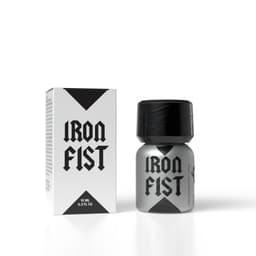
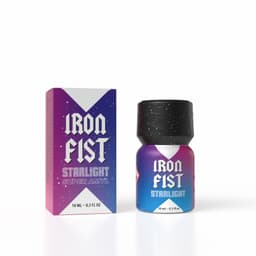
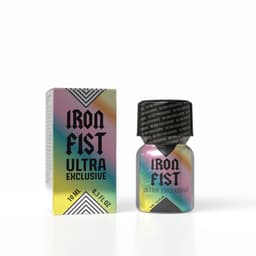
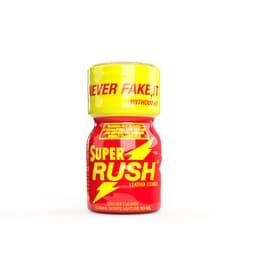
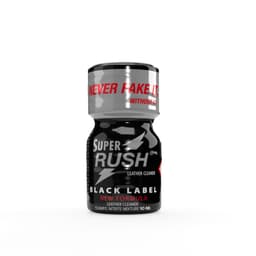
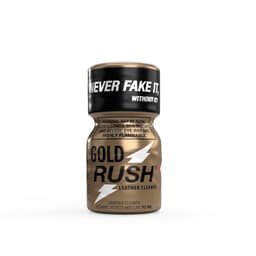
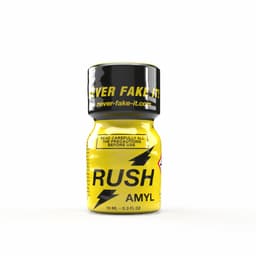
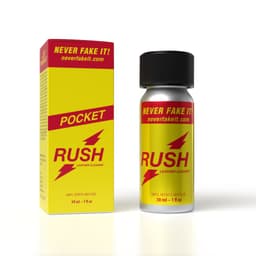
Ranges built on the amyl profile: Rush, Super Rush, Amsterdam, and Iron Fist
Several well-known ranges are formulated on the amyl solvent base, including Rush, Super Rush, Amsterdam, and Iron Fist. Each range varies in bottle size, packaging style, and label design, but all share the underlying amyl chemistry that defines their evaporation behavior and solvent strength. Customers who prefer the traditional amyl profile over other solvent families will find these ranges grouped together on this category page, making it straightforward to compare packaging formats without needing to cross-reference other solvent families.
Reading the label
Every legitimate article in this family carries a label that identifies it clearly as a cleaning and odorizing product, states that it is not for human consumption, lists the manufacturer or responsible distributor, gives net contents by volume, and displays hazard information including flammability warnings and first aid guidance for accidental exposure. A compliant label will never suggest a personal or bodily use. When reading a label, look for these elements together: a clear product classification, an adult-only notice, storage instructions, and standard hazard pictograms consistent with a flammable solvent.
Q: What exactly is an amyl-based product used for?
A: It is formulated and sold as a room odorizer, leather cleaner, or specialty solvent cleaner for surfaces and spaces, not for any bodily use.
Q: How should I store an amyl-based bottle at home?
A: Keep it upright, tightly capped, in a cool spot away from flame and direct sunlight, and out of reach of children and pets.
Q: Are Rush, Super Rush, Amsterdam, and Iron Fist all the same formula?
A: They all use the amyl solvent family as their chemical base, though bottle size, packaging, and labeling differ across ranges.
Legal notice
The articles described are room odorizers, leather cleaners and specialty solvent cleaners. They are manufactured for those commercial purposes only. They are not for human consumption and must not be introduced into the body in any way. Sales are restricted to adults aged 18 and over. Keep away from heat, open flame and children. This page is general information and is not legal advice.